
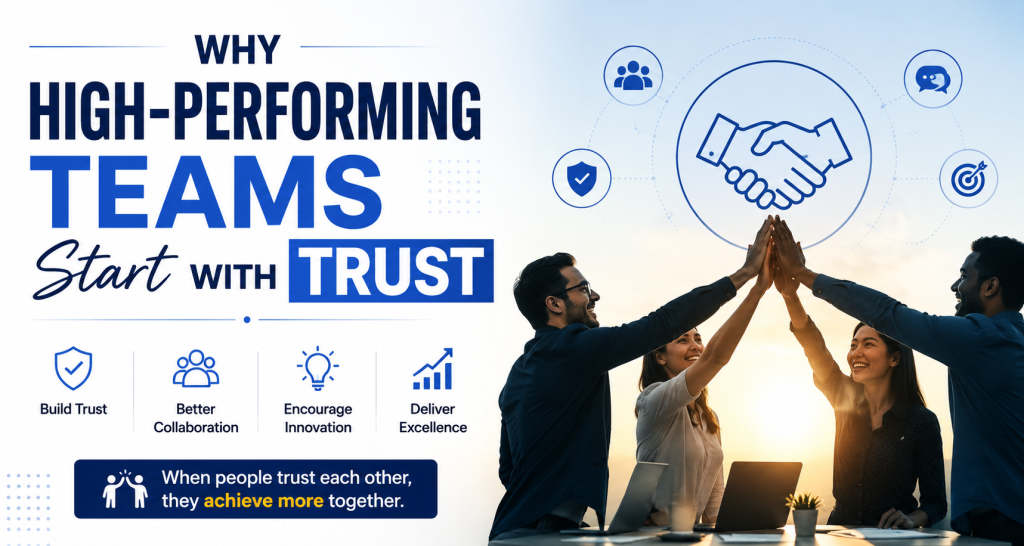
Trust is the invisible foundation behind every successful team.
Category: Leadership | Team Building | Career Growth | Workplace Culture
Reading Time: 8–10 Minutes
Introduction
When people think about high-performing teams, they often focus on talent, experience, technology, or processes.
While these are important, there is one element that quietly determines whether a team succeeds or struggles:
Trust.
A team with average skills but strong trust often outperforms a team of highly talented individuals who don’t trust one another.
Trust creates an environment where people feel safe to share ideas, admit mistakes, ask questions, and work together toward a common goal.
Whether you’re a student working on a class project, a software developer collaborating with teammates, a manager leading a department, or an entrepreneur building a startup, trust is the foundation that transforms individuals into a team.
What Is Trust?
Trust is the confidence that others will act with honesty, integrity, respect, and accountability.
It means believing that your teammates will:
- Keep their commitments.
- Support one another.
- Share knowledge openly.
- Communicate honestly.
- Take responsibility for their actions.
- Work toward shared goals instead of personal recognition.
Trust is not built through words alone. It is earned through consistent actions over time.
Why Trust Matters
Imagine joining a team where everyone is afraid of making mistakes.
People avoid asking questions because they fear being judged.
Ideas remain unspoken because someone might criticize them.
Problems are hidden instead of discussed.
Innovation slows.
Stress increases.
Now imagine another team.
People openly share ideas.
Constructive feedback is welcomed.
Mistakes become learning opportunities.
Everyone helps each other succeed.
Which team would you rather be part of?
The difference isn’t talent.
It’s trust.
Trust Creates Psychological Safety
One of the most valuable outcomes of trust is psychological safety—the confidence that you can speak up without fear of embarrassment or punishment.
In psychologically safe teams:
- People ask questions without hesitation.
- Junior members contribute ideas confidently.
- Feedback is seen as an opportunity to improve.
- Challenges are discussed early instead of becoming crises.
- Creativity flourishes because people aren’t afraid to experiment.
Innovation begins where fear ends.
The Cost of Low Trust
When trust is missing, organizations pay a high price.
Low-trust teams often experience:
- Poor communication.
- Unnecessary meetings.
- Slow decision-making.
- Office politics.
- Knowledge silos.
- High employee turnover.
- Reduced innovation.
- Increased stress.
- Missed deadlines.
- Lower customer satisfaction.
The cost of distrust is rarely visible in financial reports, but it affects productivity, morale, and long-term success.
Trust Is Built Through Small Actions
Many people think trust is earned through one big achievement.
In reality, trust grows from small, consistent actions.
Simple habits make a big difference:
- Arriving prepared.
- Meeting deadlines.
- Keeping promises.
- Admitting mistakes.
- Giving credit to others.
- Listening without interrupting.
- Respecting different opinions.
- Following through on commitments.
Trust is built one conversation, one promise, and one action at a time.
Lessons for Students
Group projects often reveal the importance of trust.
A successful team isn’t just the one with the smartest students.
It’s the one where everyone contributes, communicates openly, and supports one another.
Students who build trust early develop collaboration skills that will benefit them throughout their careers.
Lessons for Professionals
In the workplace, trust makes collaboration easier.
Professionals who are trusted become known for:
- Delivering quality work consistently.
- Being dependable.
- Sharing knowledge.
- Helping colleagues succeed.
- Communicating honestly.
Trust becomes part of your professional reputation.
And a strong reputation creates new opportunities.
Lessons for Managers
Managers don’t create trust through authority.
They create trust through consistency.
Great managers:
- Listen before making decisions.
- Treat everyone fairly.
- Keep commitments.
- Explain the reasons behind important decisions.
- Encourage learning instead of blaming.
- Recognize contributions openly.
- Support their teams during challenges.
Employees may respect authority, but they follow leaders they trust.
Lessons for Leaders
Leadership begins with trust.
People willingly follow leaders who demonstrate:
- Integrity.
- Transparency.
- Humility.
- Accountability.
- Empathy.
- Consistency.
Leadership is not about having all the answers.
It’s about creating an environment where people feel valued, respected, and empowered to do their best work.
How to Build Trust Every Day
Building trust doesn’t require grand gestures. It requires daily discipline.
1. Keep Your Word
If you make a commitment, honor it.
Reliability builds confidence.
2. Listen More Than You Speak
Understanding others is just as important as expressing your own ideas.
People trust leaders who genuinely listen.
3. Admit Mistakes
No one is perfect.
Owning mistakes demonstrates maturity and encourages others to do the same.
4. Give Credit Generously
Celebrate the achievements of your teammates.
Recognition strengthens relationships.
5. Communicate Honestly
Clear and transparent communication prevents misunderstandings and builds confidence.
6. Respect Everyone
Every person deserves respect, regardless of their role or experience.
Inclusive teams build stronger trust.
7. Support Others During Difficult Times
Trust grows strongest when people know they can depend on one another.
Trust and Innovation
Innovation requires people to take risks.
People only take risks when they trust their environment.
When trust exists:
- Ideas are shared more freely.
- Problems are identified earlier.
- Teams adapt faster.
- Collaboration improves.
- Customers receive better products and services.
Trust is not just a cultural value—it is a competitive advantage.
A Simple Daily Reflection
At the end of each day, ask yourself:
- Did I keep my commitments today?
- Did I listen with respect?
- Did I help someone succeed?
- Did I communicate honestly?
- Did my actions increase or decrease trust?
Small improvements in these areas create stronger relationships over time.
Final Thoughts
Technology changes.
Markets change.
Organizations change.
But one principle remains constant:
People do their best work when they trust the people around them.
Trust is not built overnight. It grows through consistent actions, honest communication, mutual respect, and a genuine desire to help others succeed.
Whether you’re a student working on your first team project, a professional building your career, a manager leading a department, or a leader shaping an organization, trust will always be one of your greatest strengths.
Build trust first.
Everything else—collaboration, innovation, performance, and long-term success—will follow.
Key Takeaways
- Trust is the foundation of every high-performing team.
- Strong relationships improve collaboration and innovation.
- Psychological safety encourages learning and creativity.
- Trust is built through consistent actions, not promises.
- Leaders earn trust through integrity, fairness, and accountability.
- Teams that trust each other solve problems faster and adapt more effectively.
- Every interaction is an opportunity to strengthen or weaken trust.